The poetics of Paula Parisot come laden with a deep contradiction. A contradiction that, at first glance, could render any process unfeasible. But that is not what happens here. On the contrary: the artist in question poetically inhabits this place. And, by inhabiting a conflictual zone (in the existential sense of the term), she ends up rejecting the labels so common today. For example, one of her languages is writing. Author of novels, she cannot be restricted to the activity of a writer. Aristotle said that literature “is the art that imitates (life) through words.” Indeed, our artist also mimics through words, but not only that. As someone interested in the human race as a whole, she knows that we are not made up solely of words. There is a life of symbols and signs that construct us, and it is precisely those that she seeks.
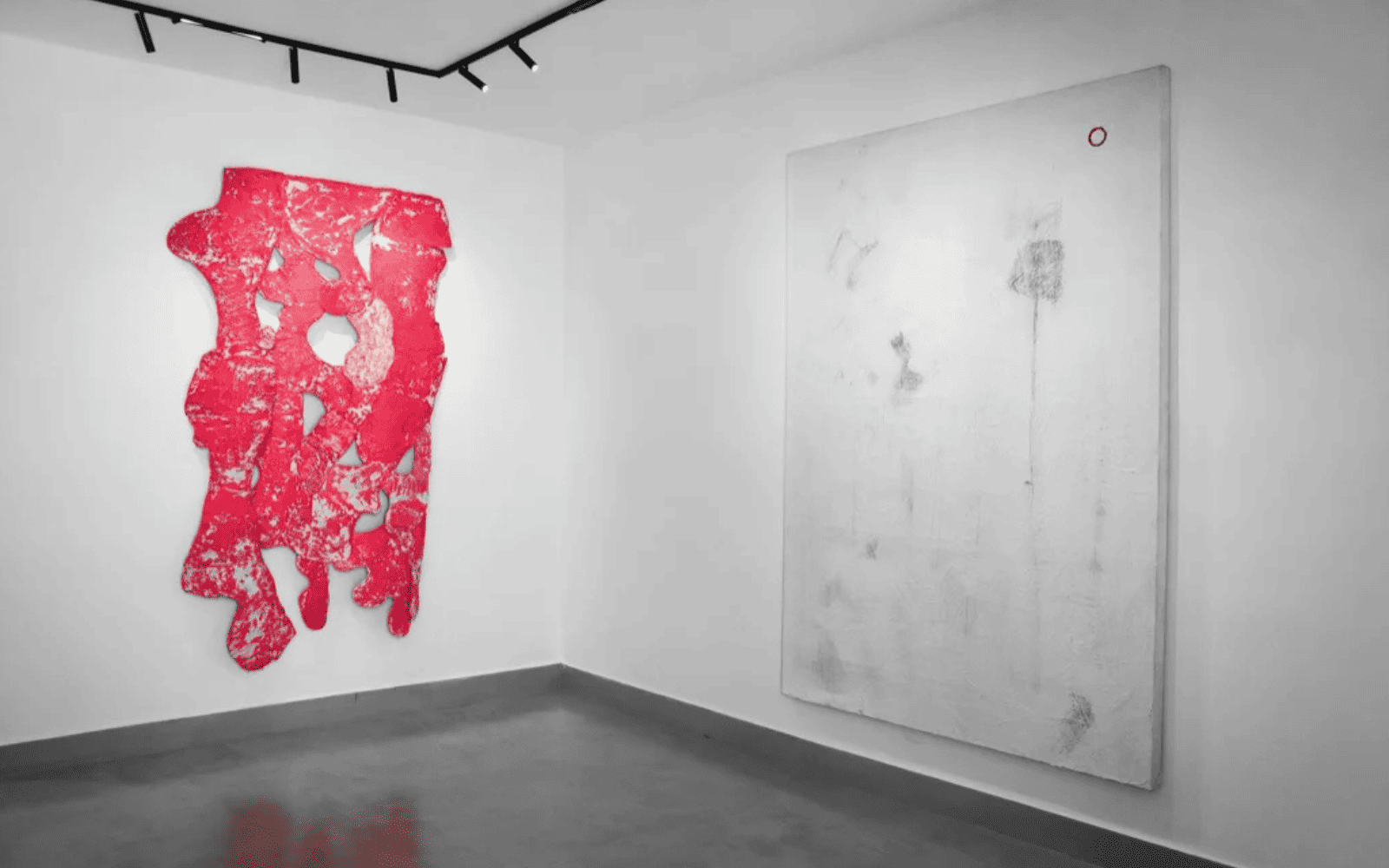
Launched into a profusion of languages, Parisot seems always to be pursuing something primordial — something that composes her, that builds us, that gives us our most basic foundation. And her works reveal exactly that. The Infância (Childhood) series, for example, consists of a set of canvases depicting a white, almost ghostly atmosphere. The milky haze that fills almost the entire composition dissolves the forms present, which become smudges of graphite, erased gestures, already so faded as to be indistinguishable. In this scenario, where the light enters filtered through a very dense white mist, the only things that stand out are a few small embroideries, creating basic geometric shapes or simple abstract constructions that, in red, project forward.
The title of this sequence alludes to a phase of human development that is absolutely crucial to the construction of personality. To speak of our childhood is to revisit very ancient structures. When speaking of something so essential, however, a disturbing fragility comes into play. The faded graphite smudges that run through the composition seem to evoke links between themselves, but they cannot be seen precisely. They seem to vanish, to fade away. Even the embroidered shapes are very small. They are imprecise, fleeting configurations. Perhaps they evoke something that has long since disappeared. Or the opposite: something that seems, however embryonically, to be taking form. We do not know whether we are facing an inevitable end or the birth of something new. But there is a play of forces underway, since, even in the face of “nothing,” the elements insist on leaving their traces.
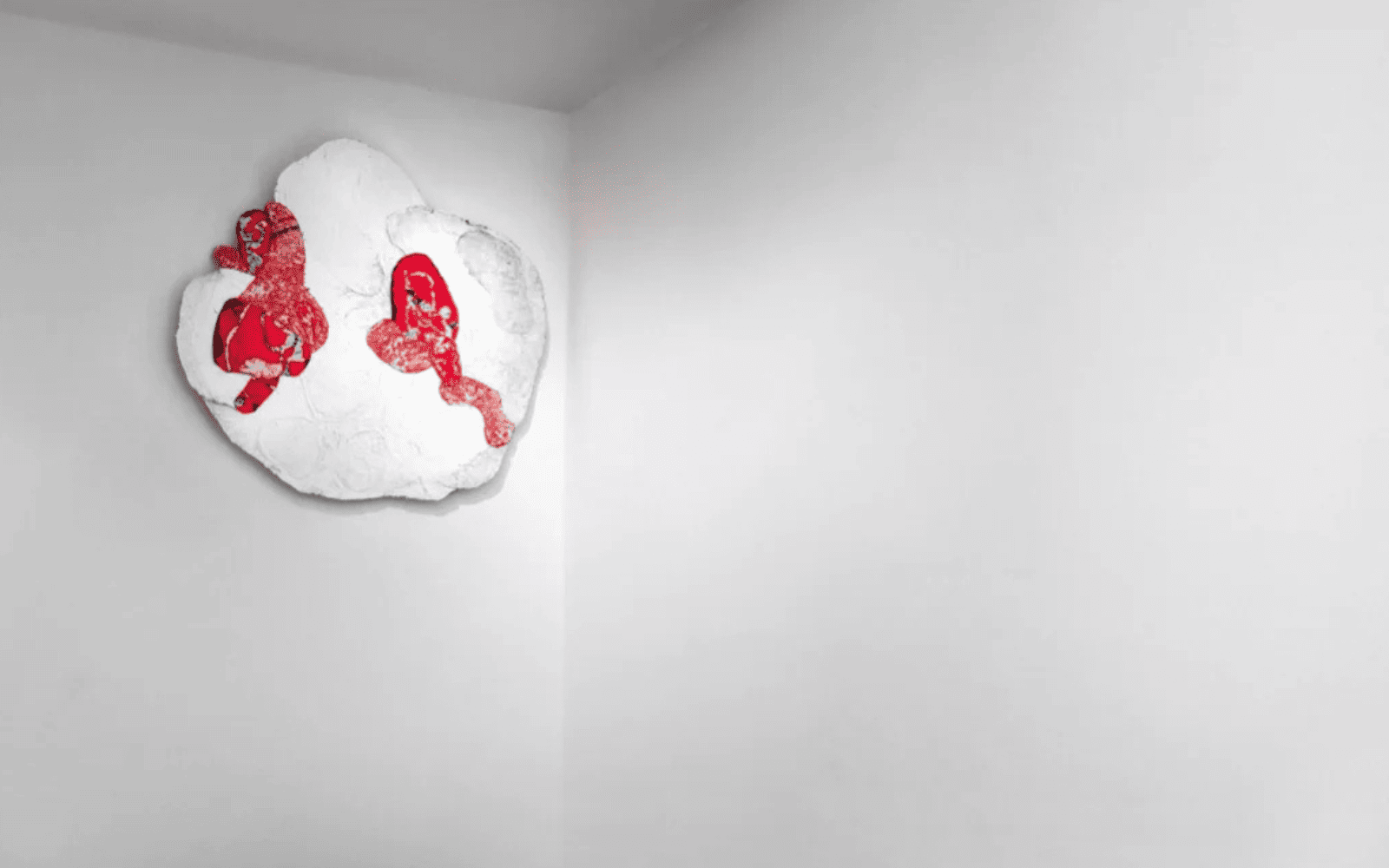
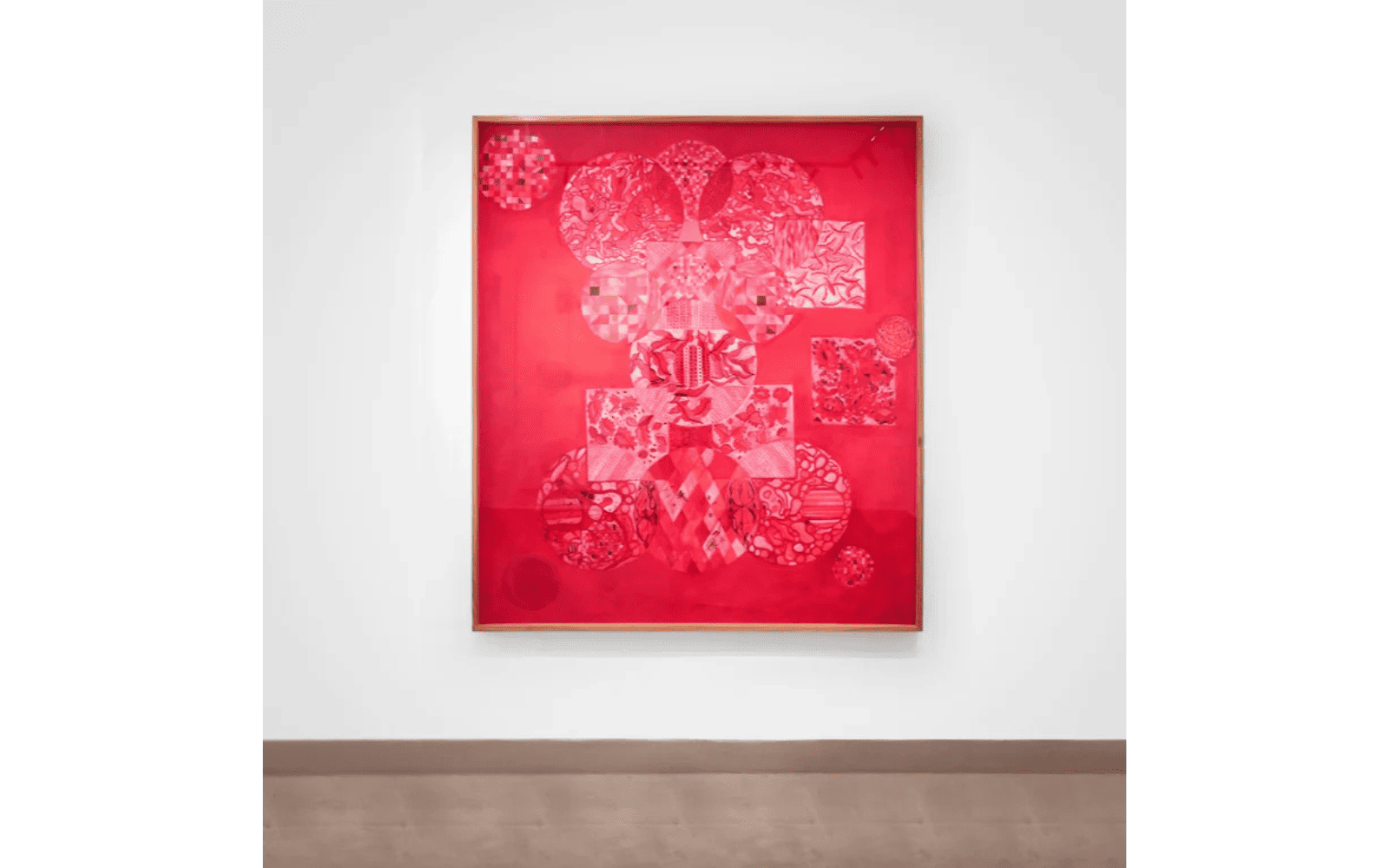
The Tessitura (Weaving) series, at first glance, seems to allude to dead matter. Made of layered and stitched fabrics, but different from one another, they are joined together in a somewhat improvised and precarious configuration. Rough in appearance and with discontinuous pigmentation, they resemble a kind of skin or shell. The shapes allude to organic forms, sometimes amoeboid, sometimes resembling “tongues.” A closer look reveals the stitches that hold the whole together. The organic quality makes it seem as if we are looking at something alive, that could emerge at any moment.
Here lies Parisot’s contradiction: even though she speaks of something very essential to all of us, that something has neither solidity nor immediate form — it is elusive, soft, unstable. The things she represents rarely become recognizable objects; most of the time they merely make allusions. And yet, they continue to compose and to matter. The threat of collapse and disintegration does not seem enough to erase or undo primal bonds and connections.
The matter of our artist composes and falls apart, saturates and fades, rises but tends toward the ground. It is precisely from this fissure, this existential contradiction, that Paula Parisot offers us clues about the world we inhabit.