If contemporary artistic production is marked by a radical and frequent interdisciplinarity, the work of artist Paula Parisot (born in Rio de Janeiro, Brazil and now based in Buenos Aires, Argentina) is, beyond being solid proof of such a statement, also a case that challenges the many possible intersections between distinct linguistic fields. A visual artist and writer, Parisot has developed a forceful practice that unfolds through mediums as disparate as they are –unexpectedly– complementary. Her works often take the form of installations that bring together paintings, drawings, videos, performances, and, of course, the written word.
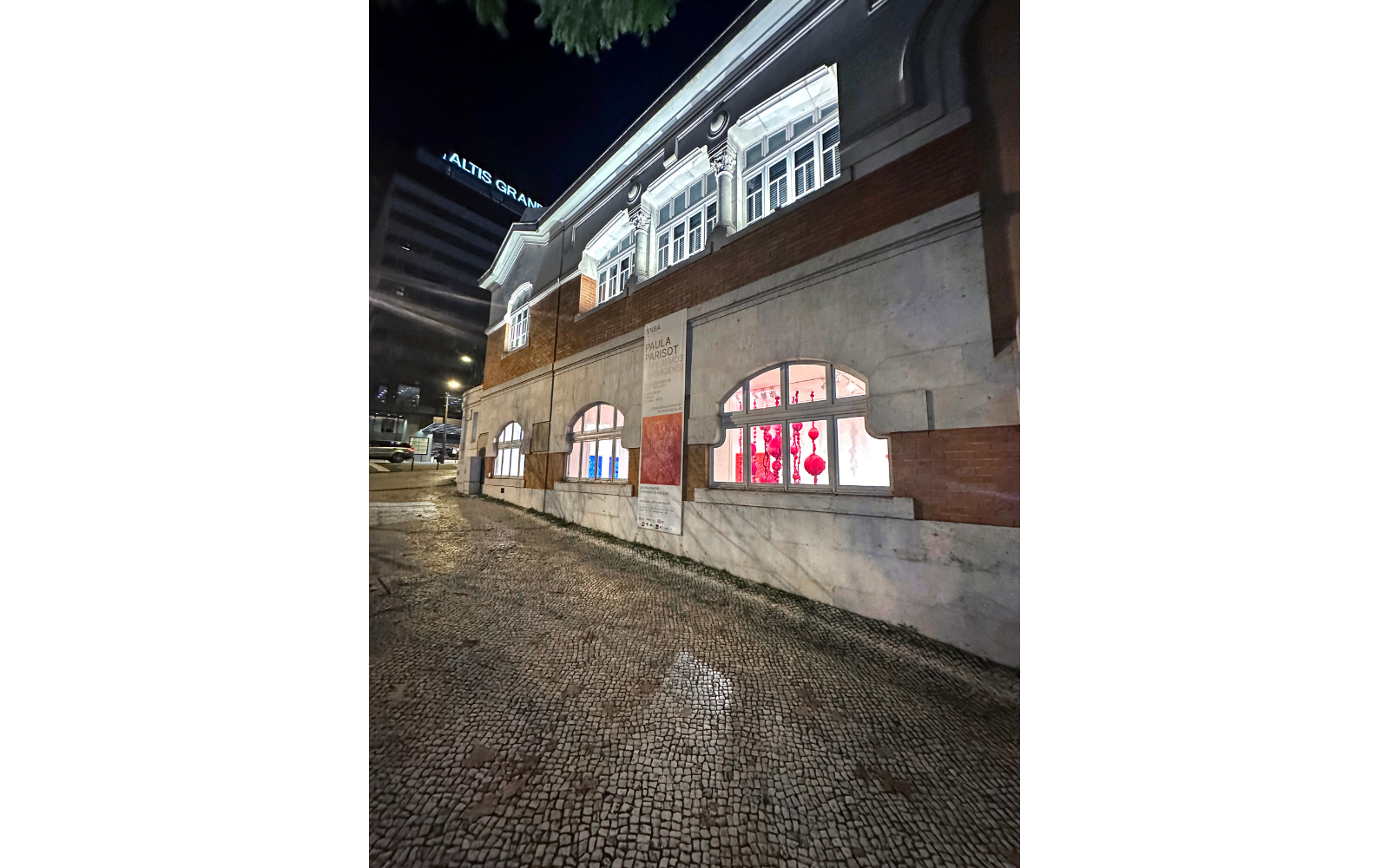
Continuing her exploration of skewed narratives –capable of intersecting in unusual and often surprising ways– Parisot presents, in the exhibition rooms of the Sociedade Nacional de Belas Artes in Lisbon, a new series of works, expanding the scope of her personal narratives from earlier projects such as Literatura do Eu, shown at the 2021 BienalSur in Buenos Aires, into something larger. While still rooted in her own experiences, the artist now seeks to transcend her personal sphere by creating works that include, for instance, the collaboration of invited artists such as Thelma Fardin, Tatiana Parcero, Cecilia Szperling, and Leticia Mazur, participants in the new video DesConcerto (2023).
In this piece, the personal histories and artistic practices of each participant play a crucial role –not only for their individual accomplishments, but also for being significant voices in the struggle for women’s rights within the Latin American context. Each, through their bodies, their voices, and their life stories, embodies feminist and female struggles, and triggers narratives of abuse and violations of all kinds –physical, moral, judicial, and beyond.
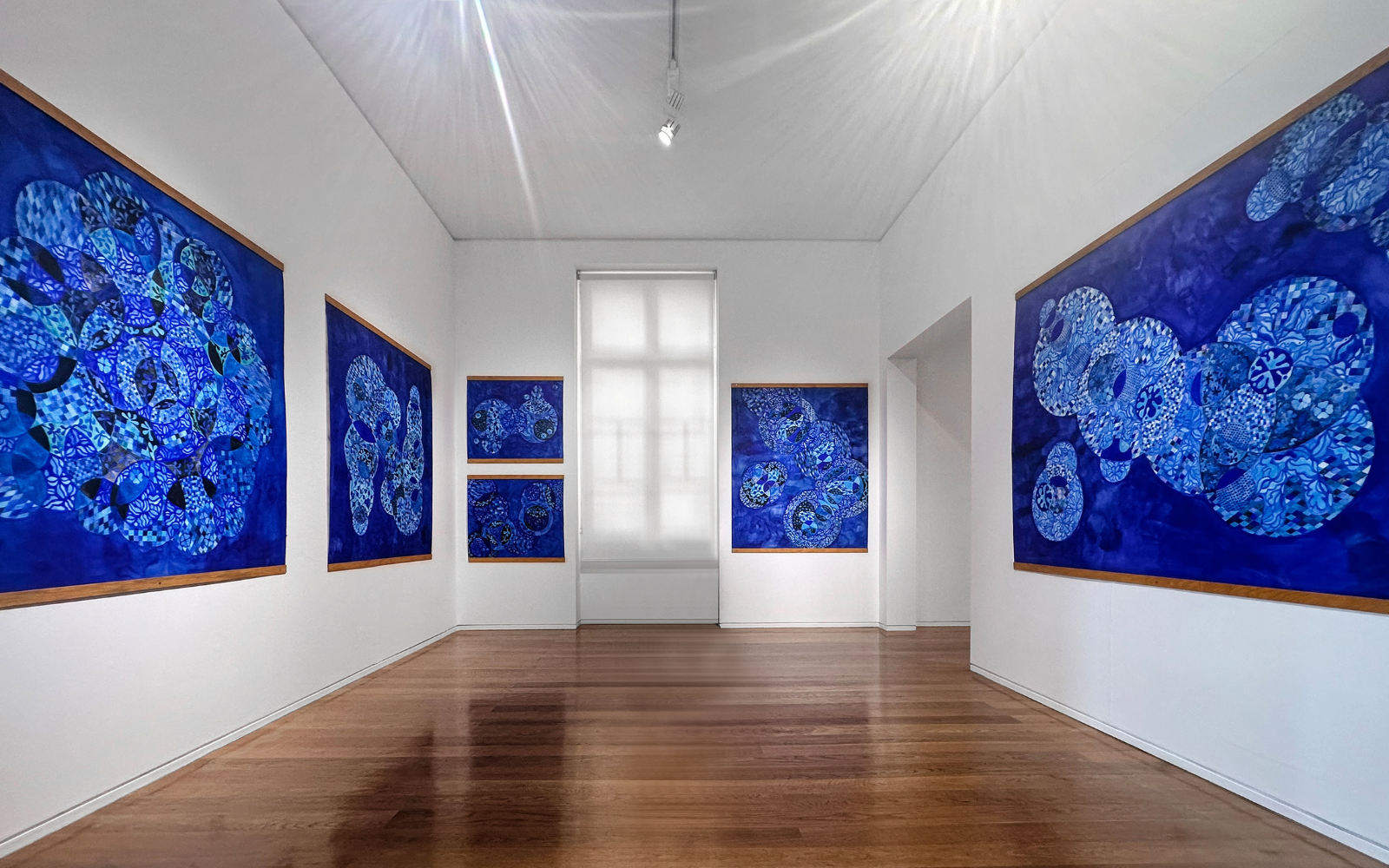
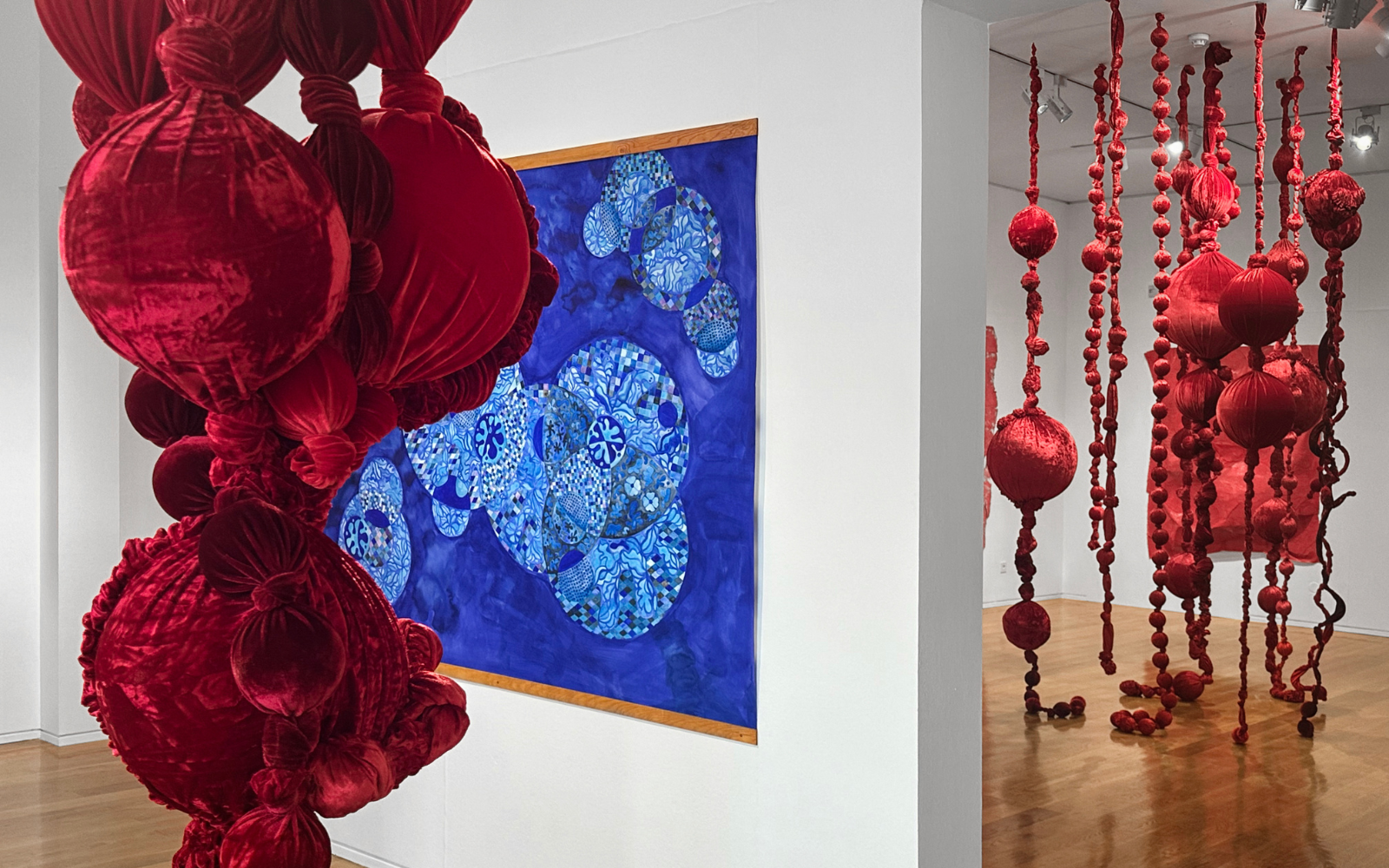
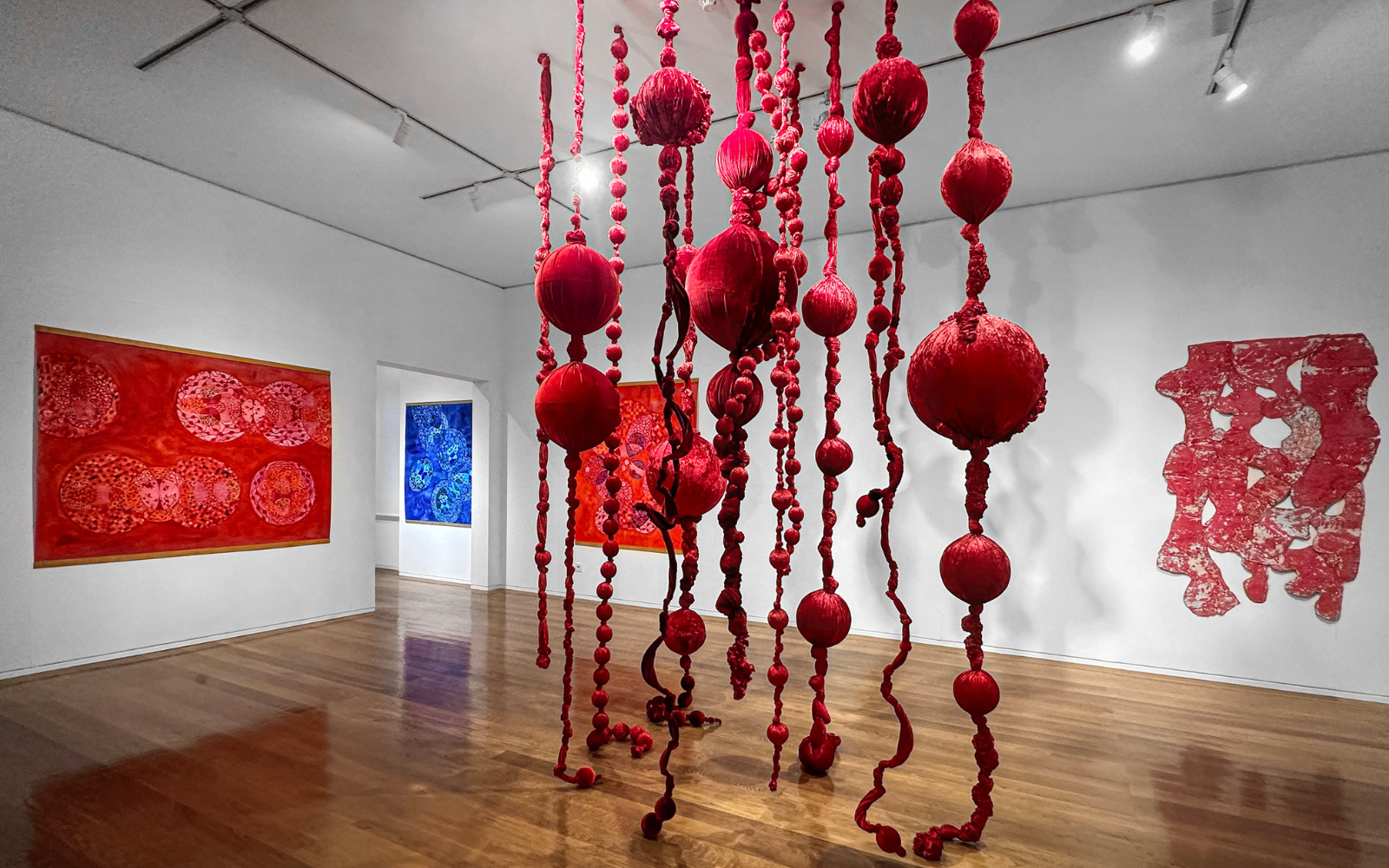
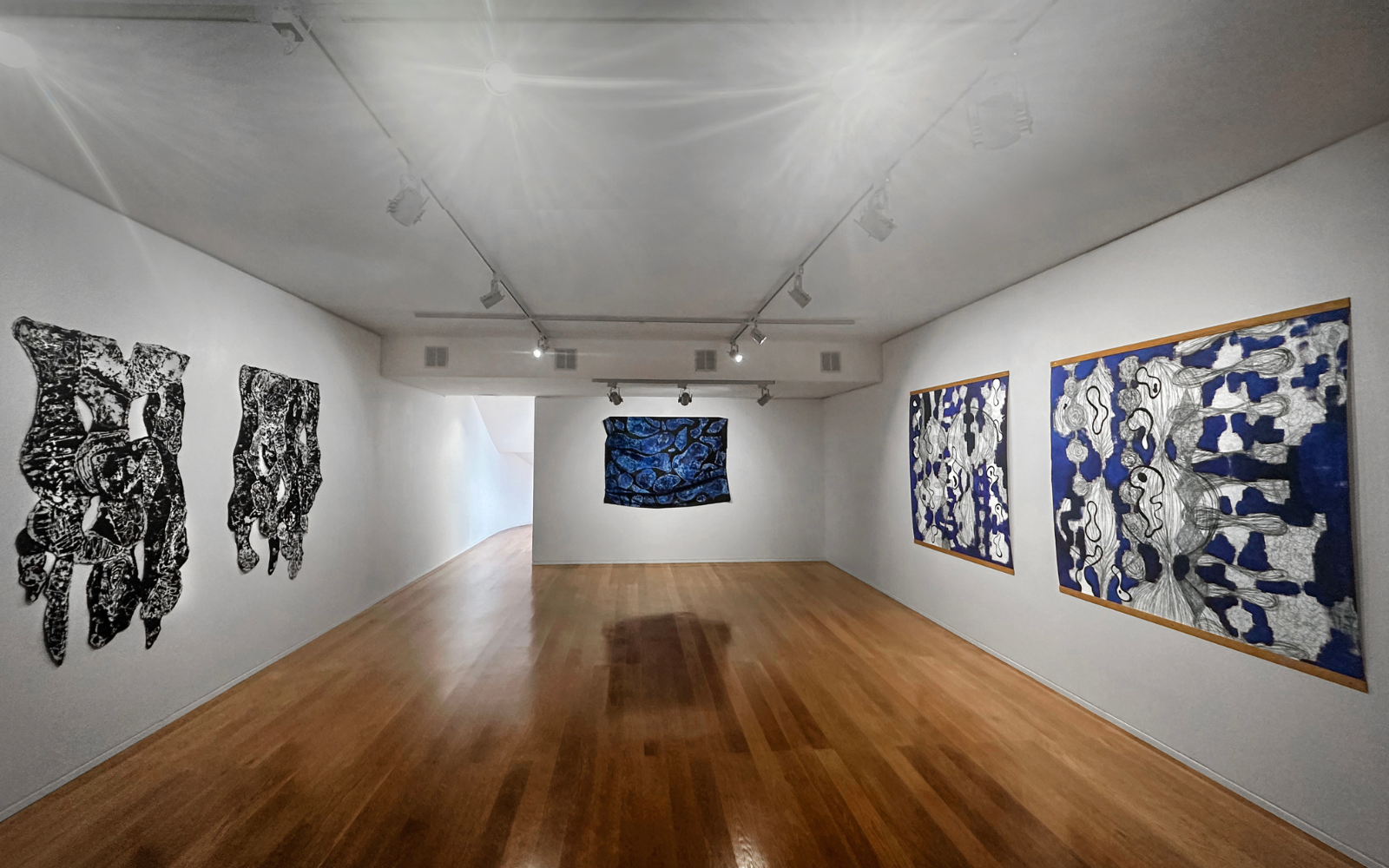
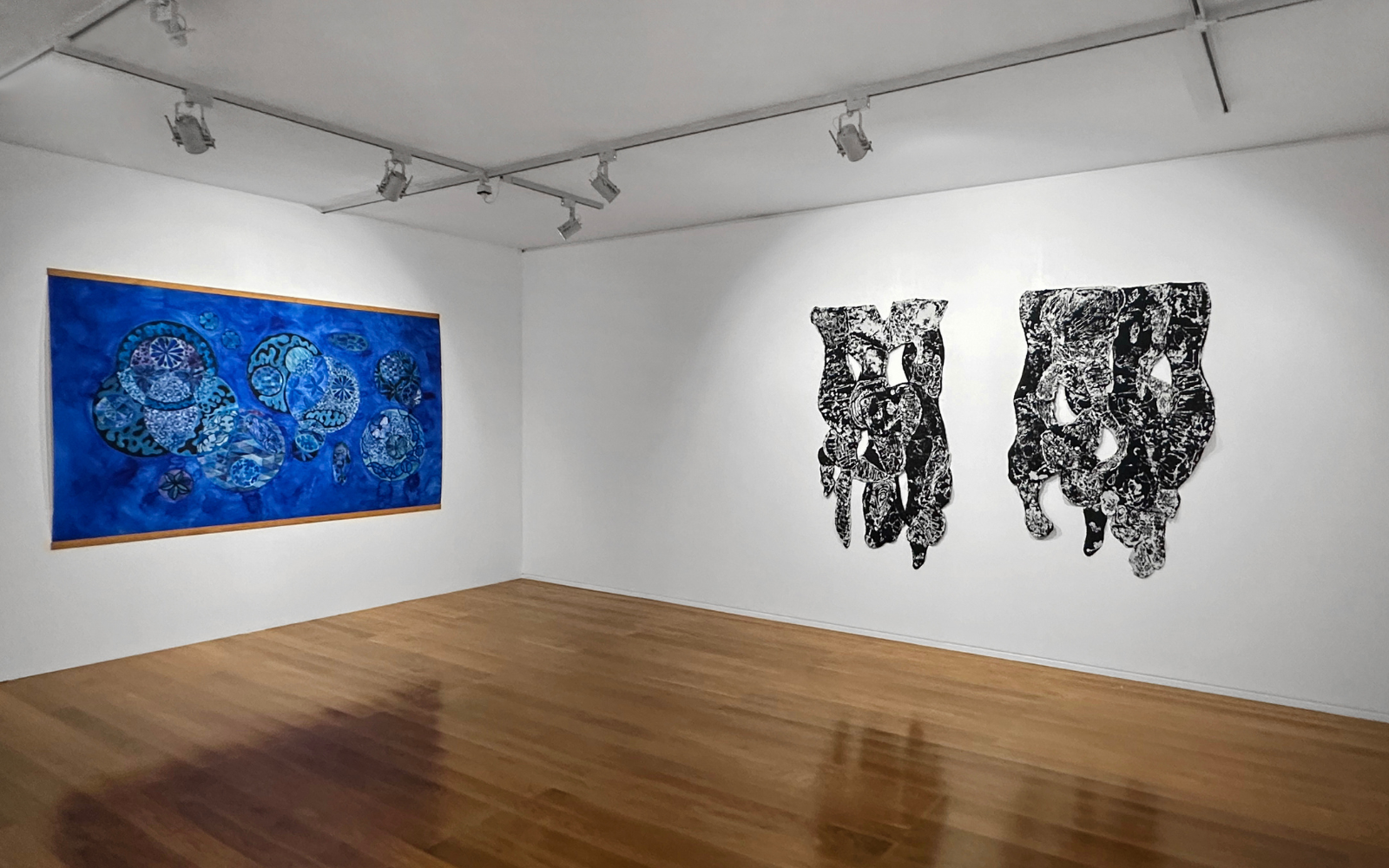
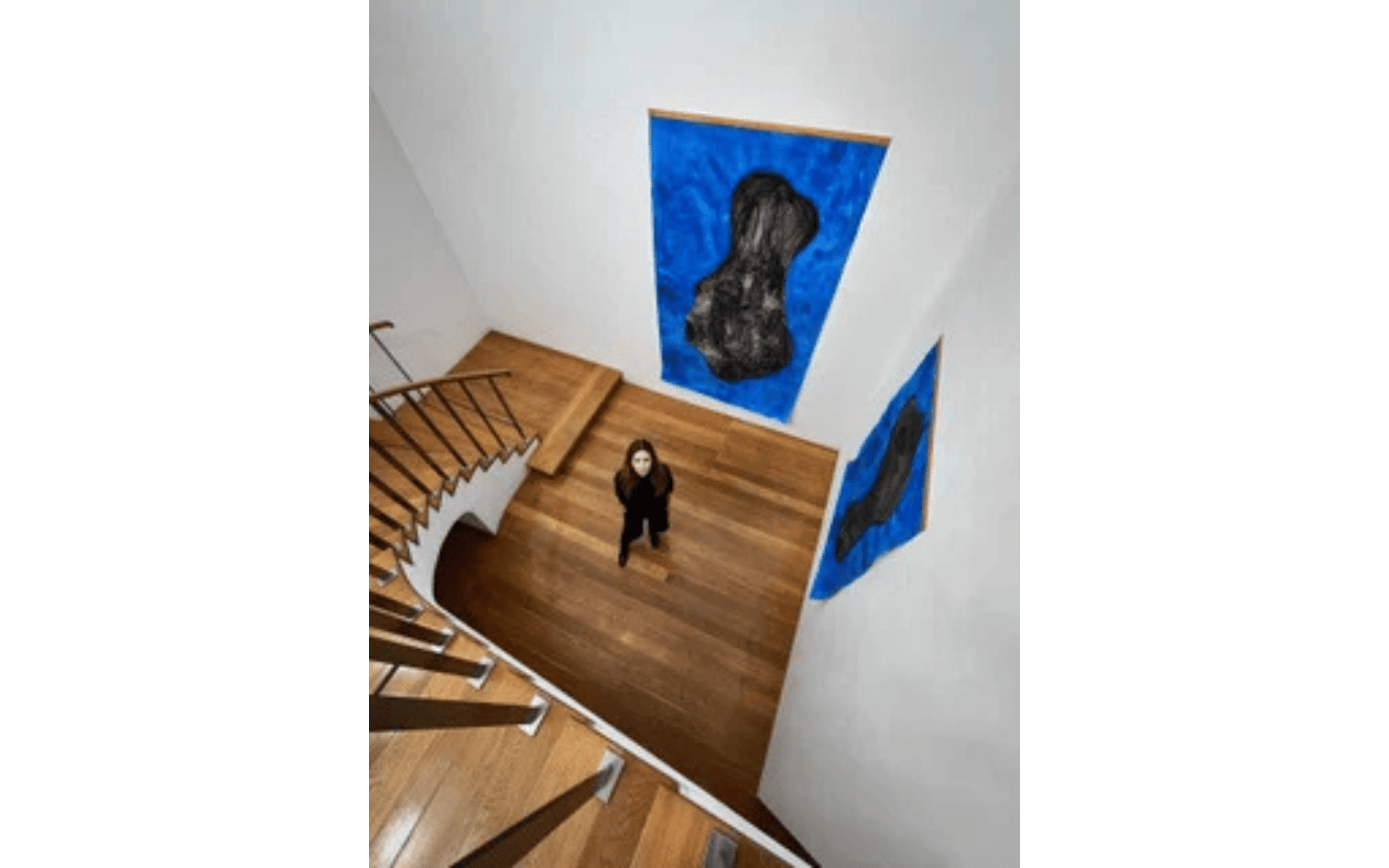
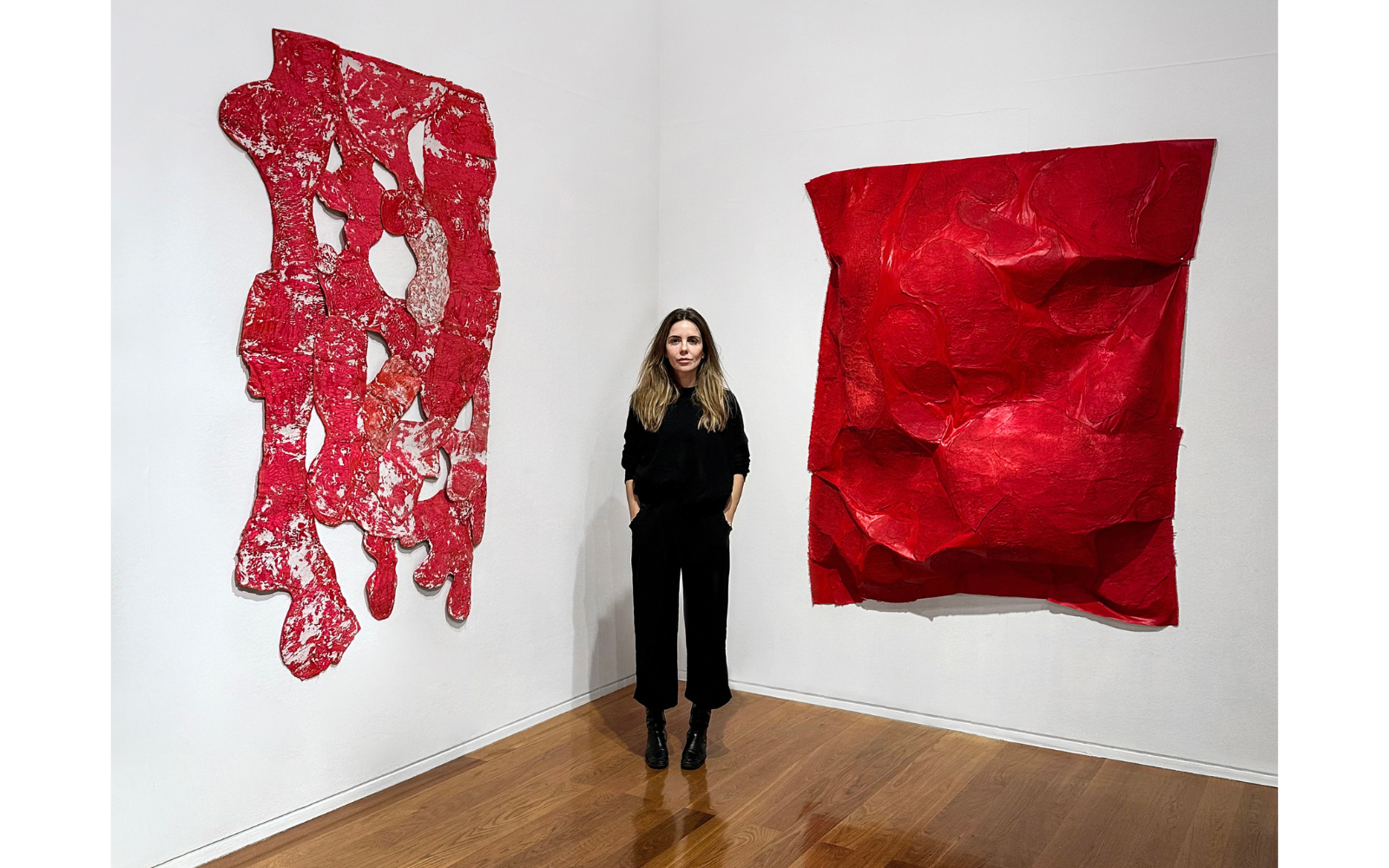
From the first gallery of the SNBA to the last –where DesConcerto is projected– the exhibition leads us through a lyrical and narrative journey across sculptures, paintings, drawings, and other works by Parisot, often created as scenic supports for her audiovisual production. The blue and red tones, highlighted both in these works and in the video itself, operate as a kind of phenomenology of color, capable of instilling vibrations, sensations, and attuned atmospheres, flooding our retinas and awakening unsuspected territories in our cognitive apparatus and our perception.
The exhibition’s title is born from an affection for the multiple semantic layers contained in the Spanish word espejismo. According to the dictionary, the term designates a kind of fleeting optical illusion produced by the total reflection of light in a given space, in which objects and people nearby may appear more distant and vice versa; resting places –the so-called “oases”– in the midst of a desert, whether literal or symbolic.
But we know that a mirage is neither good nor bad, and that it both contains something concrete and springs from the dense fruit of pure illusion. The voices gathered here, our bodies moving through the installation spaces, slight brushes, chance encounters, silent pacts, pregnant silences, non-obvious paths –even this one who writes, for that matter– must keep watch when stepping into the terrain of a mirage. Of the espejismos.
It is there that reality and fiction –already deeply entangled– reach the climax Parisot’s work seeks to attain: Espejismos is an exhibition to be experienced while awake or, perhaps, when we find ourselves drifting into sleep right there, in a profound rite of renewal and cleansing. That sleep (finally calm, finally just, finally equal) will not be the fruit of any illusion. Or so we hope.