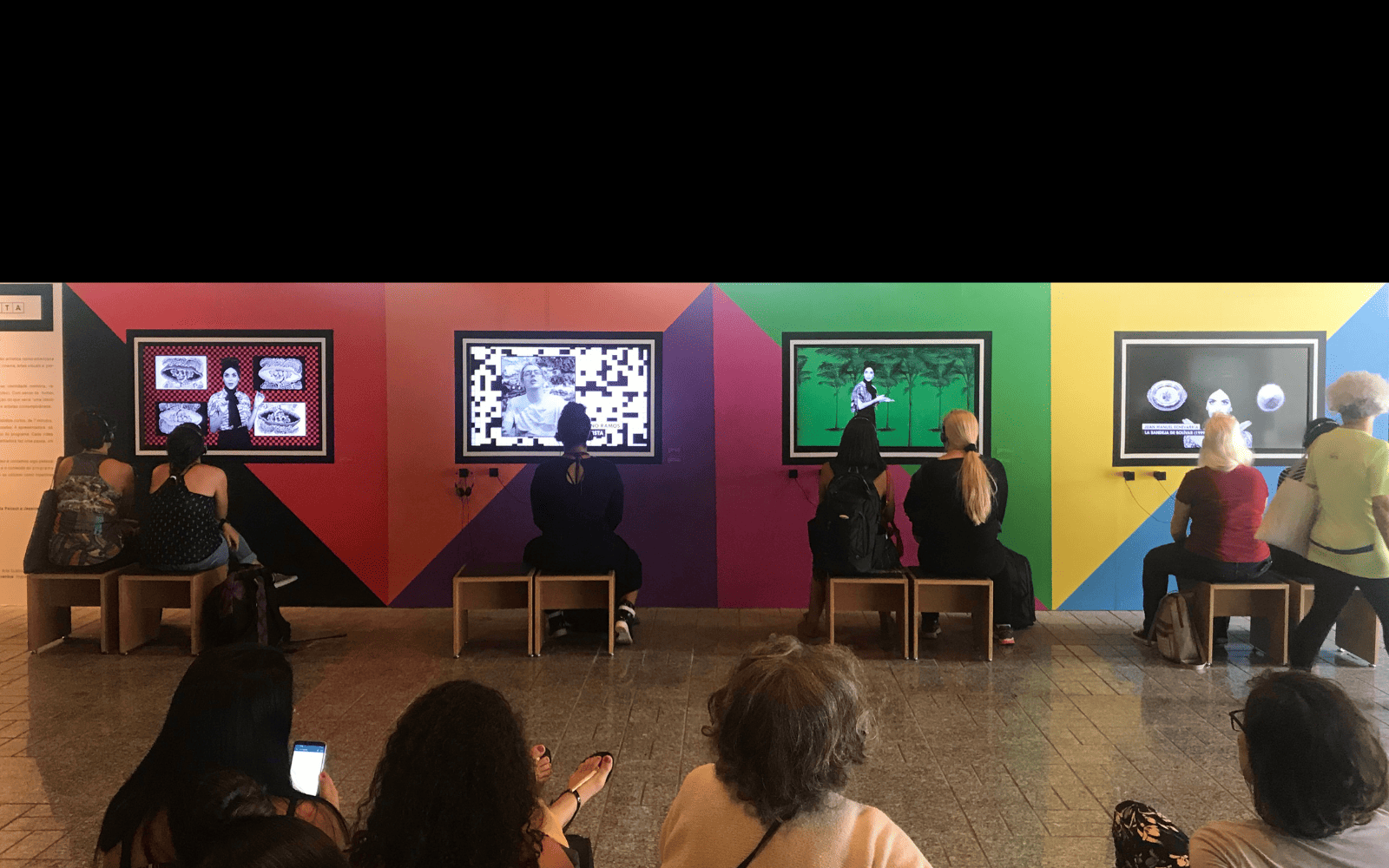
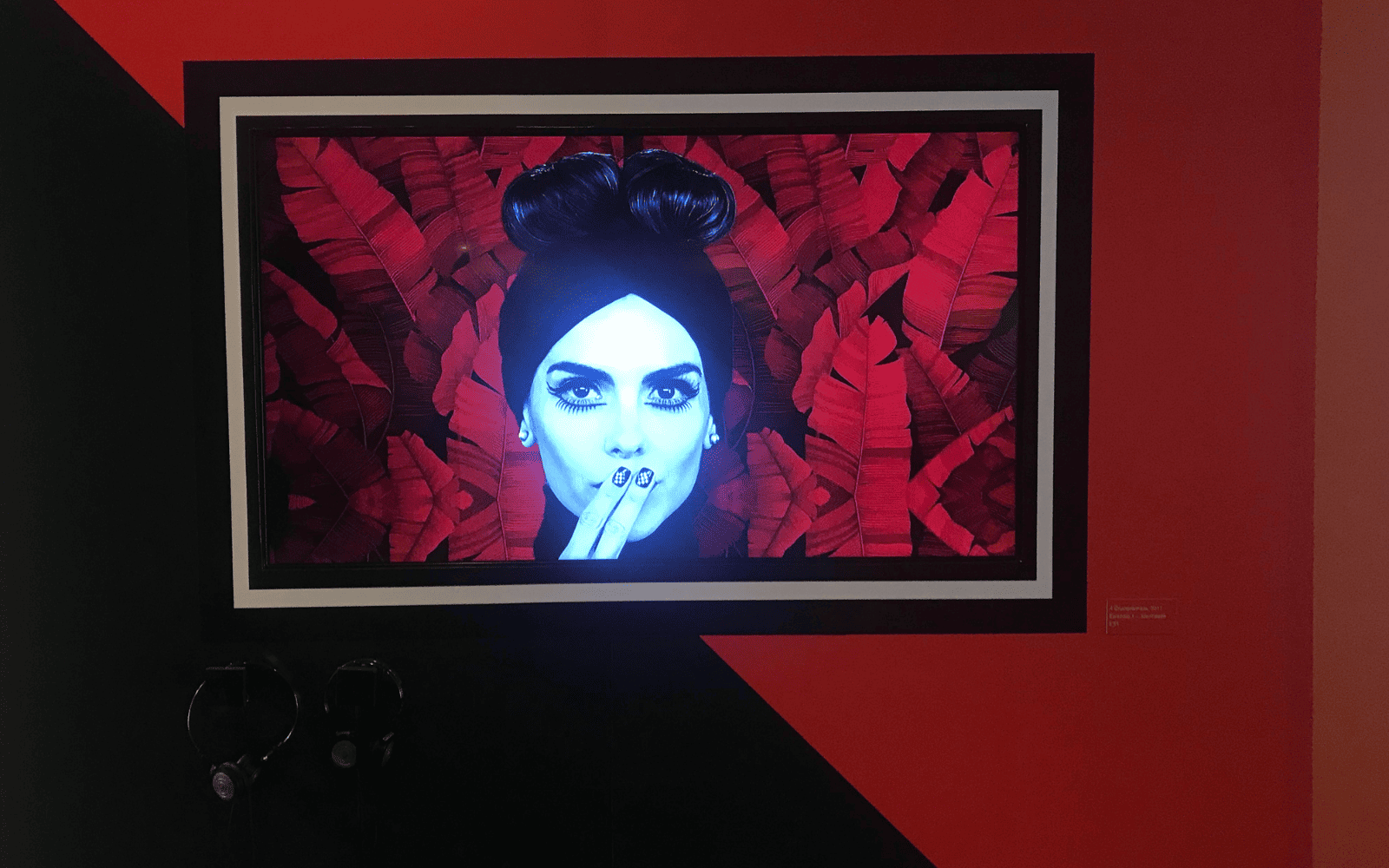
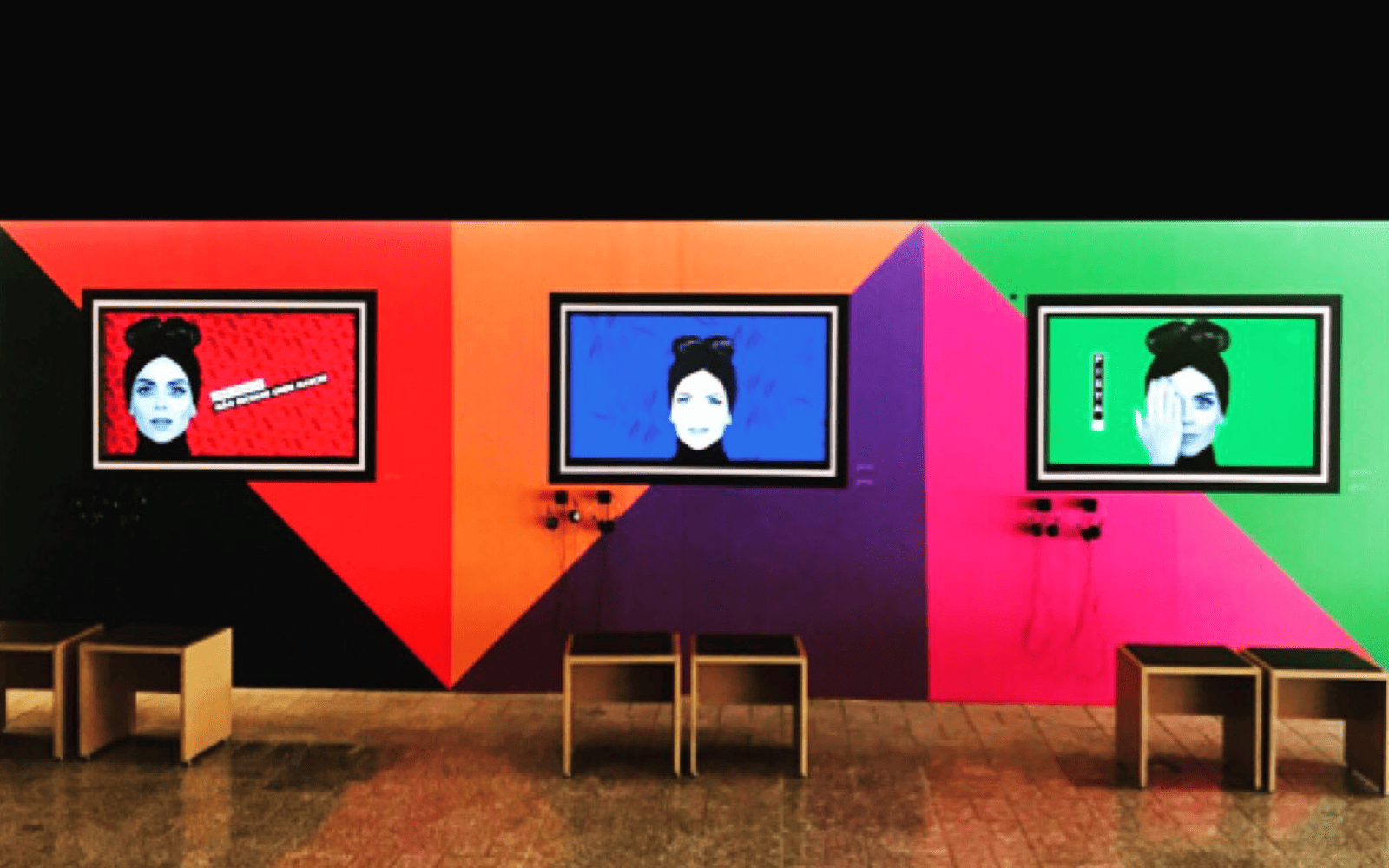
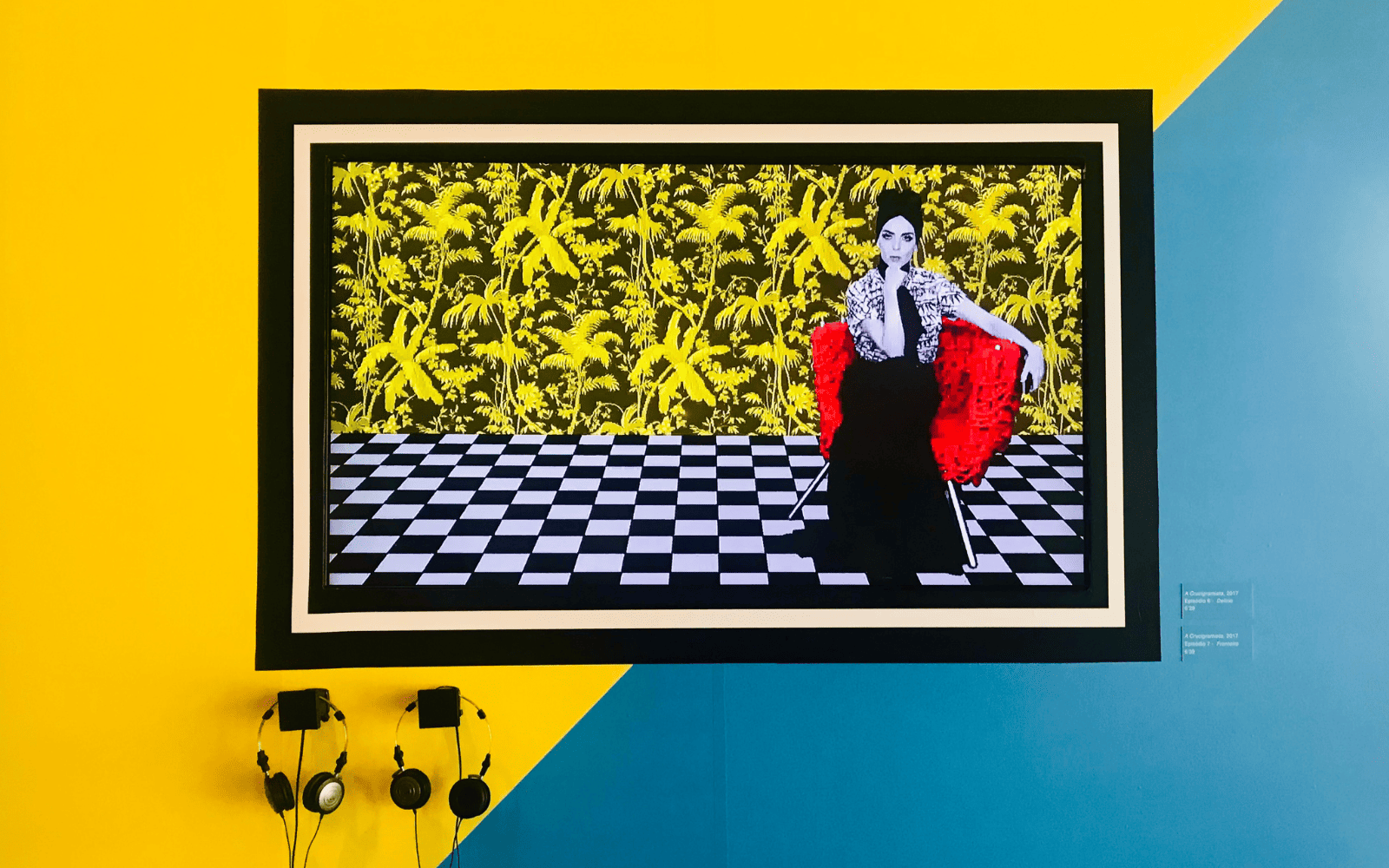
(This text was published within the framework of the International Seminar Against the Canon. Art, Feminism(s) and Activisms in the 18th to 21st centuries. Bienal Mercosul 12 – 2020.)
Between 2016 and 2019, Jessica Mitrani and Paula Parisot created A CRUCIGRAMISTA, a television project directed by Jessica Mitrani and written in collaboration with Paula Parisot, commissioned by the ARTE1 channel in Brazil. The two series – América Invertida and América Feminizada – present the work of more than two hundred Latin American artists.
In 2015, the cultural channel ARTE1 in Brazil invited us to create a program that would address Latin American artistic production from an interdisciplinary perspective, showcasing different forms of artistic expression: literature, cinema, visual arts, and performance.
What is the difference between television today and television before the internet? After all, with current technology, we have immediate access to all kinds of information in multiple formats. So, we asked ourselves: how can we create a series that offers many references – a kind of “hyperlinks” – so that the interested viewer can search on their own for other tools to delve deeper into the subjects presented?
A CRUCIGRAMISTA was conceived in a concentrated educational format, with short 7-minute episodes. The structure of the videos of A CRUCIGRAMISTA is based on a crossword puzzle. The host gives a clue. The word appears in the crossword puzzle. Each word is a segment of the program. Each video contains six words.
Considering that we are Latin American artists – one Brazilian, the other Colombian – we infused the program with our own way of seeing and thinking about art in Latin America, without losing sight of the fundamental: in addition to informing, we aim to provoke and inspire the 15 million subscribers to the ARTE1 channel.
The script is written so that we, the authors, appear at the beginning and share something personal or give a first-person opinion. The goal is to make it evident that the information and content of the program are subjective and partial.
The first season is called América Invertida. We begin with the following themes: identity, memory, residence, progress, emancipation, and borders (each of the seven themes is addressed in one episode). With humor, the first season examines ideas that underpin the construction and formation of what could be called “a Latin American identity,” subverting them and creating a dialogue between established figures and contemporary artists.
The second season, América Feminizada, addresses themes related to creativity and the feminine in Latin America, using a feminist pedagogy that seeks to politicize through its own aesthetic. The seven videos are structured around seven archetypes fundamental to the construction of the feminine: virgin, mother, muse, queen, visionary, weaver, and BEING. Through artworks and guests, we question and complicate these images, creating associations to re-signify these symbols. The intention is to give new meanings to history, memory, and bodies.
Self-reflection was one of our research methods for creating América Feminizada. Personally, feminism gave us a vocabulary to know ourselves and to be coherent with ourselves. It was an individual search for identity that inevitably led us to connect with the legacy of artists and thinkers who dared – and continue to dare – to break with patriarchal ideas that place women and feminized bodies in a position of fewer rights.
In América Feminizada, the six crossword words are replaced with female proper names, since surnames are patriarchal – whether from the father or the husband. There is a segment called Beware of Domestic Objects! – a pause within the video in which artworks related to the domestic sphere are presented. At the end, there is a conclusion that calls the viewer to action.
América Feminizada means giving a continent a female character. The feminine is an attribute that has been underestimated and associated with weakness, subjugation, and exploitation. We chose the term feminizada to value the feminine principle as an essential attribute, emphasizing the perception that recognizing and activating the feminine in each of us is the path to the survival of all individuals and the planet.
Our intention was to showcase as many artists, activists, writers, thinkers, art collectives, and exclusively Latin American feminisms as possible, taking as a starting point the feminisms from Abya Yala, Black feminisms, and regional statistics that highlight the psychological and physical violence against women and feminized bodies. We found it necessary to insist on a platform for women artists and feminized bodies because the marginalization of women continues to occur in the contemporary art world, despite all the feminist artistic activism of the 20th century.
For us, feminism is not only a movement of a specific period, nor a feminism that seeks to hierarchize identities, but rather a vocabulary that allows us to articulate the denial of rights and the violence of patriarchy toward women and feminized bodies. We believe in a feminism that includes women, men, non-human persons, plants, animals, or whatever each person considers themselves to be.
The creation of these videos was a path of transformation to confront the misogyny of society (and the internalized kind).
Our intention is to create and share a space that interrogates the idea of the feminine, recognizing ourselves and engaging in dialogue with beings vibrantly different yet vitally equal.
*A CRUCIGRAMISTA means “The Crosswordist” — a female creator of crossword puzzles, here reimagined as a poetic and artistic figure.