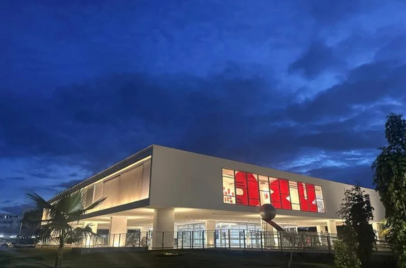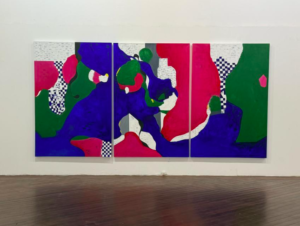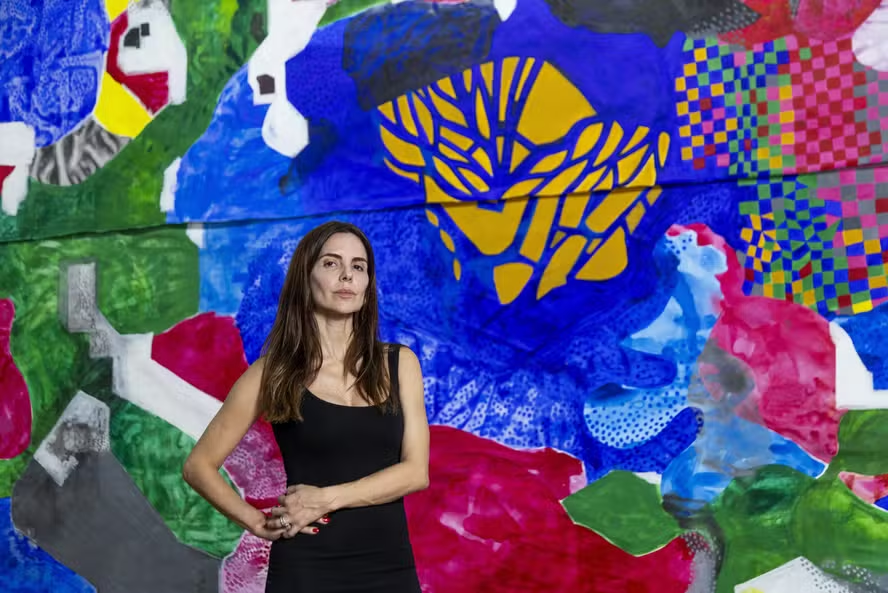
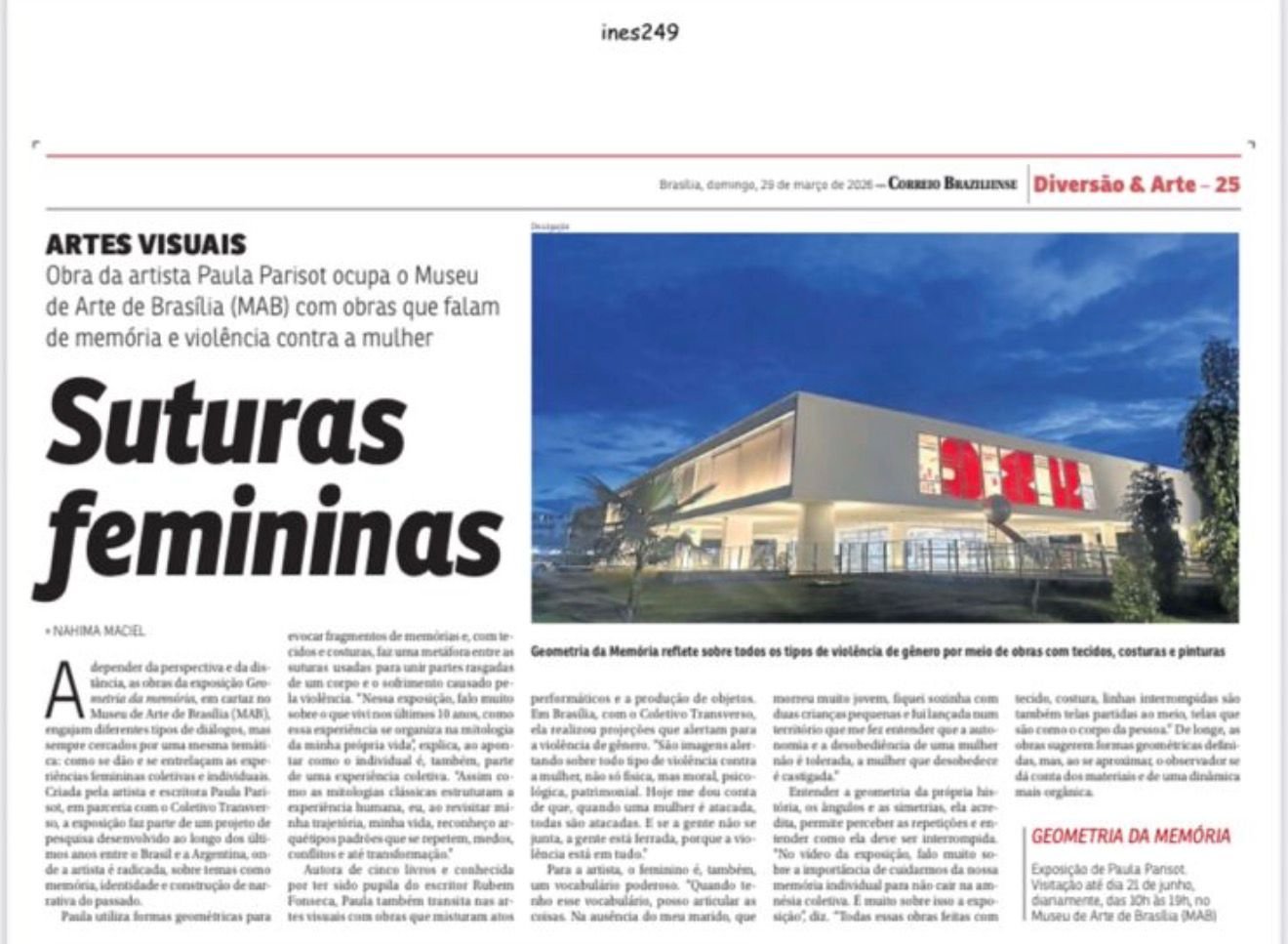
Depending on perspective and distance, the works in the exhibition Geometry of Memory, on view at the Museum of Art of Brasília (MAB), engage in different kinds of dialogue, but always revolve around the same theme: how collective and individual female experiences take shape and intertwine. Created by artist and writer Paula Parisot, the exhibition is part of a research project developed over recent years between Brazil and Argentina, where the artist is based, addressing themes such as memory, identity, and the narrative construction of the past.
Paula uses geometric forms to evoke fragments of memory and, through fabrics and stitching, creates a metaphor between the sutures used to join torn parts of a body and the suffering caused by violence. “In this exhibition, I talk a lot about what I’ve lived through over the past 10 years, how this experience is organized within the mythology of my own life,” she explains, pointing out how the individual is also part of a collective experience. “Just as classical mythologies structure human experience, by revisiting my trajectory—my life—I recognize recurring archetypes, fears, conflicts, and even transformation.”
Author of five books and known for having been a mentee of writer Rubem Fonseca, Paula also works in the visual arts with pieces that blend performative acts and object-making. In Brasília, together with the Transverso Collective, she carried out projections that raise awareness about gender-based violence. “These are images that warn about all kinds of violence against women—not only physical, but also moral, psychological, and economic. Today I realize that when one woman is attacked, all women are attacked. And if we don’t come together, we’re in trouble, because violence is everywhere.”
For the artist, the feminine is also a powerful vocabulary. “When I have this vocabulary, I can articulate things. After the death of my husband, who passed away very young, I was left alone with two small children and thrown into a situation that made me understand that a woman’s autonomy and disobedience are not tolerated—the woman who disobeys is punished.”
Understanding the geometry of one’s own history—its angles and symmetries—she believes, allows one to perceive repetitions and understand how they must be interrupted. “In the exhibition video, I talk a lot about the importance of caring for our individual memory so we don’t fall into collective amnesia. That’s very much what the exhibition is about,” she says. “All these works made with fabric, stitching, interrupted lines are also canvases split in half—canvases that are like the human body.” From a distance, the works suggest defined geometric forms, but up close, the viewer becomes aware of the materials and a more organic dynamic.
Read the full article on the Correios Braziliense website: Exhibition on view at MAB addresses memory and violence against women