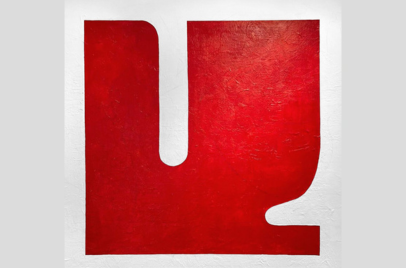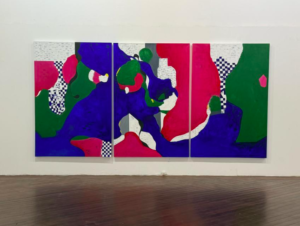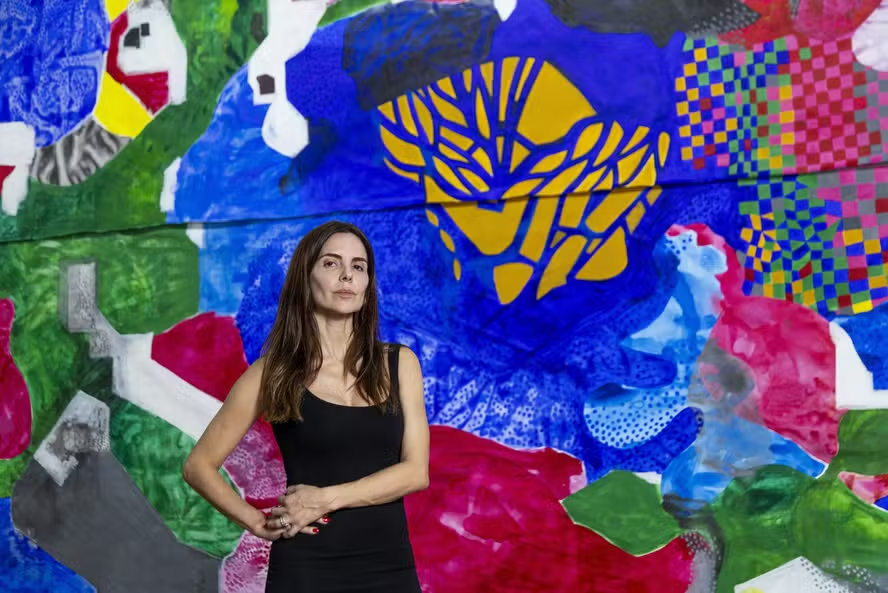
Memory is not only what we retain from the past: it is a living substance that shapes the body, language, and ways of existing in the present. It is from this understanding that Paula Parisot builds her work—an oeuvre permeated by personal experiences and emotions. This investigation takes shape in Geometry of Memory, the artist’s most recent work.
For Parisot, creating has never been an aesthetic whim or something “decorative.” It is, above all, a matter of survival and presence in the world. “The art I make is my identity. It is the right I have to be alive, not to disappear,” she states. In her view, creation does not function as an escape from reality, but as a way of aligning thought, body, and experience—a means of organizing what she feels and lives.
Unlike those who seek in art a simple refuge, Paula approaches creation as something inseparable from her own skin and trajectory. Her work does not ignore pain, wounds, or scars, but it also refuses to be defined solely by them. Fear and conflict do appear, yet what stands out is movement: the constant attempt to understand what has passed in order to move forward.
“Telling one’s own story—retelling our past—is about speaking of the mythology of our own life. Just as classical mythologies organize human experience into narratives, by narrating my own trajectory I identify a set of stories, archetypes, and symbolic figures: patterns that repeat, such as falls, returns, conflicts, and transformations. Recognizing these patterns allows me not to confuse repetition with destiny and, therefore, not to be condemned to repeating what has already been repeated,” reflects Paula.
It is within this context that Geometry of Memory takes form. Lines and geometric shapes emerge as an attempt to bring some order to what is, by nature, fragmented and emotional, yet this order is never rigid or closed: “Memory is not fixed. It constantly dismantles and reconstructs itself, acquiring new meanings as we change and grow.”
Read the full article on the DASARTES website: Paula Parisot | Museum of Art of Brasília (MAB)